
Could You Afford a Castle? The Real Cost of Historic Homes
Mark Zuckerberg and his wife, Priscilla Chan, have reportedly purchased Strancally Castle, a 19th-century Gothic estate in County Waterford, Ireland. The 16,000-square-foot castle sits on approximately 440 acres overlooking the River Blackwater, and its estimated value is somewhere between €20 million and €30 million—or roughly $23 million to $35 million. (Last year the couple bought a home in Washington DC for $23M just off Massachusetts Avenue.)
Clearly, neither of these homes is your typical first-time home purchase. But the story made me wonder: Do you really need to be a billionaire to buy a castle? Surprisingly, the answer is no. Maintaining one, however, may be another matter entirely.
Some European Castles Cost Less Than Bethesda Homes
According to a recent report cited by Mansion Global, the median asking price for a European castle is approximately €1.74 million, or just under $2 million. That is certainly expensive, but perhaps not as staggering as you might expect. In Bethesda, Chevy Chase and Washington, DC, $2 million can buy a beautiful home—but it will probably not include towers, turrets, a ballroom, several hundred acres or a moat.
Castle prices vary dramatically according to location. Poland reportedly offers some of the lowest prices per square foot, while Switzerland is among the most expensive. (I guess you need a castle to go with your secret Swiss bank account!) France, Italy, Germany, Ireland and Scotland all have historic properties available at prices that may look surprisingly reasonable when compared with luxury real estate in the Washington metropolitan area.
Of course, there is a reason some of these enormous properties appear to be bargains.
When the Dream Home Becomes an Ancient Fixer-Upper
If Mark Zuckerberg’s newly acquired Irish castle represents the fantasy, another property currently making news offers a glimpse of the reality.
Domaine de Ballerand is a remarkable 700-acre estate in southwestern France. Its centerpiece is an 8,653-square-foot château built in 1498 as a hunting lodge. It sits on a small island, surrounded by one of the estate’s six lakes, and even has a bridge leading to a floating helipad. There are also several additional residences, an underground parking garage, more than three miles of private roads and a former stone forge that was rebuilt as an event space.
In other words, this is not simply a house with a slightly demanding garden.
The property is currently listed for €9.5 million—approximately $11 million—and is scheduled to be sold at auction. According to Mansion Global, approximately €15 million has been invested in the estate over the past several decades. The roof was replaced, infrastructure was modernized, roads and underground parking were added, and several of the secondary buildings were renovated. Here is a true reality check! Despite all that work, the château’s interior is unfinished and currently uninhabitable. The building is said to be structurally sound, but its next owner will need to complete a full interior renovation before moving in.
That is quite a definition of “move-in ready.”
The Australian couple who own the estate once visited once or twice a year,but reportedly have been using it less frequently as they have grown older. Their experience raises a question that applies to much more ordinary homes: Does the property still fit the life you are actually living?
A house may be beautiful, historically important and filled with wonderful memories. But if maintaining it becomes overwhelming—or if you are rarely there—it may eventually feel more like an obligation than a pleasure. You do not need 700 acres, six lakes and a helipad to recognize that feeling. Many owners of large homes in Bethesda and Chevy Chase eventually discover that unused rooms, extensive landscaping and deferred repairs still require attention, whether anyone is enjoying them or not.
The château also demonstrates why renovation spending and resale value are not always the same thing. An owner may spend millions improving a distinctive property without recovering every dollar at resale. Some improvements protect and preserve a home; others make it more enjoyable for a particular owner. Neither automatically guarantees a financial return.
That does not mean the work was a mistake. It simply means that a home—especially a historic one—is not a bank account wearing a beautiful stone façade.
The Purchase Price Is Only the Beginning
A castle may offer thousands of square feet at what looks like an irresistible price, but price per square foot does not tell you whether the roof leaks, the plumbing works or the heating system requires a small power plant.
Before buying any historic property, buyers need to investigate the roof, stonework, electrical system, plumbing, drainage, heating, foundation and any deferred maintenance. A castle that has been waiting 300 years for a new roof is unlikely to wait patiently while you obtain three estimates – of course, if it has been waiting 300 years, what’s an extra year or two?
Historic protections may also control what can be repaired, replaced or altered. Specialized materials and craftsmanship can make seemingly ordinary projects extraordinarily expensive. Even when a building is structurally sound, converting an empty historic interior into a comfortable modern home can require years of planning and work. Then there are the grounds. Seven hundred acres do not mow themselves, no matter how charmingly you ask. (Raise your hand if you have read Under the Tuscan Sun! or A Year in Provence)
Insurance is another consideration. Historic properties can cost more to insure because rebuilding may require rare materials, specialized artisans and historically appropriate construction methods. The National Trust for Historic Preservation notes that historic replacement coverage can be harder and more expensive to obtain than conventional homeowners’ insurance.
Then there are the grounds. Four hundred acres do not mow themselves, no matter how charmingly you ask.
A Castle Is a Lifestyle, Not Just a House
Most people do not buy castles because they need more closet space. They buy them because they fall in love with the architecture, the history, the privacy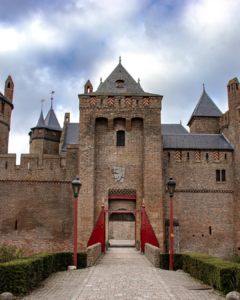 and the idea of becoming the caretaker of something unique. I understand the attraction. I have always loved historic homes because they have character and a story. There is something wonderful about original stonework, beautifully proportioned rooms and craftsmanship that cannot easily be reproduced today.
But romantic properties require practical thinking. Who will maintain the house and grounds? How much will it cost to heat? Is there reliable internet service? How far away are the nearest airport, hospital and grocery store? Are the staircases manageable? Can the property accommodate changing mobility needs? And, perhaps most importantly, what will happen when it is eventually time to sell? Those are not very romantic questions, but after 38 years in real estate, I can tell you that they are often the questions that matter most. Still, I find myself perusing websites devoted to dreamers like me who would love to own a historic home in Italy or France.
Could a Castle Pay for Itself?
Some owners offset the expense by turning all or part of a castle into a wedding venue, boutique hotel, vacation rental or corporate retreat. Others lease farmland, host tours or use cottages on the estate as rental properties. That can help, but it also changes the nature of the purchase. You are no longer simply buying a dramatic home. You may be buying a hospitality business, an event venue and a major restoration project—all wrapped in ivy.
Buyers must understand local zoning, licensing, taxes, accessibility rules, staffing needs and restrictions on historic buildings. They should also determine whether the income assumptions are realistic rather than depending upon a steady parade of brides, tourists and film crews to pay for the plumbing.
A castle can potentially produce income, but it should not be treated like a conventional investment property. Improvements made for preservation or personal enjoyment may not be fully recovered when the property is sold.
The Castle Lesson Applies to Every Home
Most of us are not shopping for a 440-acre Irish estate, but the lesson applies to every real estate purchase.
The least expensive house is not always the most affordable house. A home with an attractive price may need a new roof, major drainage work, extensive landscaping or substantial renovations. A condo with a manageable purchase price may have high monthly fees or an approaching special assessment. An older house may offer wonderful architecture while requiring specialized maintenance and higher utility costs. Conversely, a more expensive home that has been carefully updated may cost less to own over the next five or ten years.
That is why buyers should consider the full cost of ownership rather than focusing exclusively on the sales price. Inspections, insurance, taxes, utilities, maintenance, repairs and future resale potential all belong in the calculation.
Would I Buy a Castle?
 I love historic architecture, sweeping staircases and a house with a good story. I could probably even become attached to a turret. But 440 acres sounds like an awful lot of yard work, and I suspect Captain would never come back when called. For now, I will happily admire Mark Zuckerberg’s castle from a distance. Still, if you find a charming little castle near Bethesda with updated plumbing, reasonable taxes and easy access to the Capital Crescent Trail, please let me know. I might be persuaded to schedule a showing.
And if your real estate dream is slightly more practical—a historic Washington home, a Bethesda condo, a downsizing move or simply a house with enough character to feel like your own private castle—I would be delighted to help.
Frequently Asked Questions
Do you have to be a billionaire to buy a castle?
No. Some European castles are listed for prices comparable to luxury homes in Bethesda, Chevy Chase and Washington, DC. However, the purchase price may be only a small part of the property’s total long-term cost.
Why can some European castles seem inexpensive?
Many are located in remote areas or need extensive restoration. A low asking price may reflect costly roof, stonework, heating, plumbing or structural repairs, as well as limited resale demand.
Is it difficult to finance a castle?
It can be. Unusual or historic properties may be difficult for conventional lenders to appraise, and some buyers may need a specialty lender, substantial down payment or cash purchase.
Is insurance more expensive for a historic home?
It may be. Historic homes can require specialized materials and craftsmanship after a loss, resulting in higher replacement costs and fewer available insurance options.
Can a castle be used as a business?
Potentially. Some castles operate as hotels, vacation rentals, wedding venues or retreats. Buyers must investigate zoning, licensing, preservation restrictions, accessibility requirements and operating expenses before relying on rental or event income.
What should I consider before buying an older or historic property?
Buyers should carefully evaluate the roof, foundation, electrical system, plumbing, heating, drainage, insurance availability, renovation restrictions and ongoing maintenance. A thorough inspection and estimates from contractors experienced with older homes are especially important.
Does this advice apply to historic homes in Washington, DC and Maryland?
Absolutely. Although a Kalorama mansion or Chevy Chase Victorian may not have a moat, historic and older homes can present similar questions involving preservation rules, specialized repairs, insurance and long-term maintenance.
ABOUT THE AUTHOR
Lise Howe is an Associate Broker with RLAH @properties and has been helping buyers and sellers throughout Bethesda, Chevy Chase, Montgomery County, and Washington, DC for nearly 40 years. Known for her warm, personalized approach and deep knowledge of the local market, Lise believes that every client deserves honest advice, clear communication, and an advocate who genuinely cares about their goals.
Whether working with first-time buyers, downsizers, or luxury home clients, Lise combines decades of experience with a commitment to making every real estate transaction as smooth and enjoyable as possible. When she’s not helping clients, you’ll often find her walking the Capital Crescent Trail with Captain, exploring local neighborhoods, or sharing insights about the communities she loves.