
If you’ve seen headlines warning that new home inventory is at its highest level since the 2008 crash, you’re not alone. And if you lived through that housing crisis, the sight of new construction booming again might stir up some concern.
But before jumping to conclusions, let’s take a closer look at what’s really happening—and why this time is different.
📊 Why This Isn’t 2008 All Over Again
Yes, new home inventory has climbed. But that’s just one piece of the puzzle. To understand the full picture, we need to consider both new builds and existing homes (those previously lived in). When you combine those numbers, today’s overall housing supply looks very different from the oversaturated market of 2008.
Back then, we had a flood of homes—new, existing, and distressed properties like foreclosures—all hitting the market at once. That oversupply was a major factor in the crash.
Today? We’re still facing a shortage.
🧱 Builders Are Catching Up—Not Overbuilding
After the crash, builders pulled back hard. For over 15 years, new construction lagged behind population growth and demand. That long stretch of underbuilding created a housing deficit we’re still trying to close.
The recent uptick in new builds isn’t reckless—it’s a long-overdue correction. Experts estimate it could take another 7.5 years of steady building to meet demand.
Builders Have Actually Underbuilt for Over a Decade
And here’s some other important perspective you’re not going to get from those headlines. After the 2008 crash, builders slammed on the brakes. For 15 years, they didn’t build enough homes to keep up with demand. That long stretch of underbuilding created a major housing shortage, which we’re still dealing with today.
The graph below uses Census data to show the overbuilding leading up to the crash (in red), and the period of underbuilding that followed (in orange):
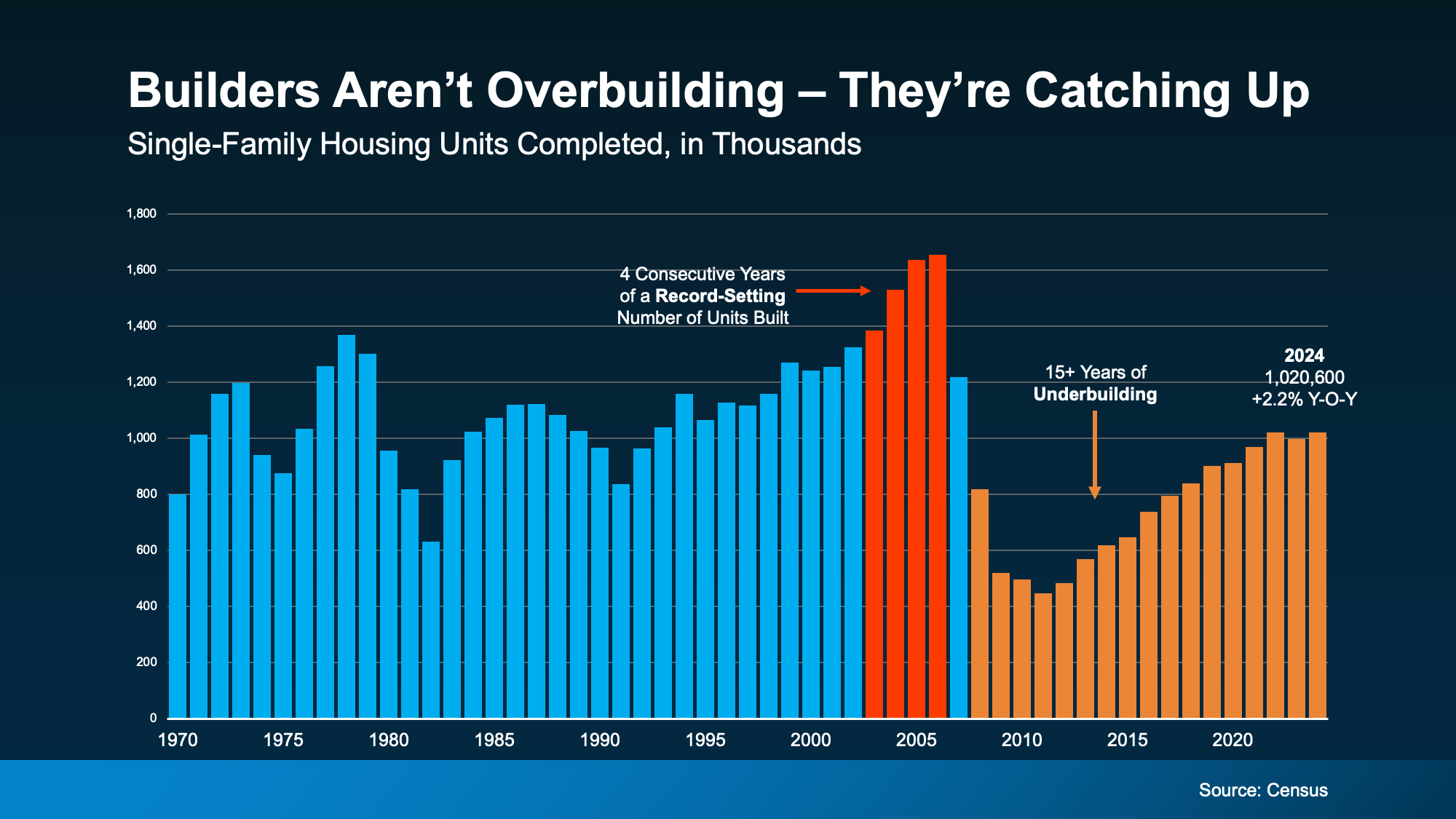 Basically, we had more than 15 straight years of underbuilding – and we’re only recently starting to slowly climb out of that hole. But there’s still a long way to go (even with the growth we’ve seen lately). Experts at Realtor.com say it would roughly 7.5 years to build enough homes to close the gap.
Of course, like anything else in real estate, the level of supply and demand is going to vary by market. Some markets may have more homes for sale, some less. But nationally, this isn’t like the last time. In case you want a new home in the DC metro area, just click here to see what is available.
🏡 What This Means for Buyers and Sellers
- Buyers: More new homes mean more choices, especially in markets where existing inventory is tight.
- Sellers: Low existing inventory keeps competition strong and prices stable.
- Homeowners: Rising new construction doesn’t signal a crash—it signals recovery.
🔍 Bottom Line
Don’t let clickbait headlines cloud your judgment. Today’s inventory growth is part of a healthy rebalancing—not a repeat of 2008. If you’re curious about what builders are doing in your area or want to explore how this affects your buying or selling strategy, let’s connect.